SERVICES
Person-Centered Support That Fits.
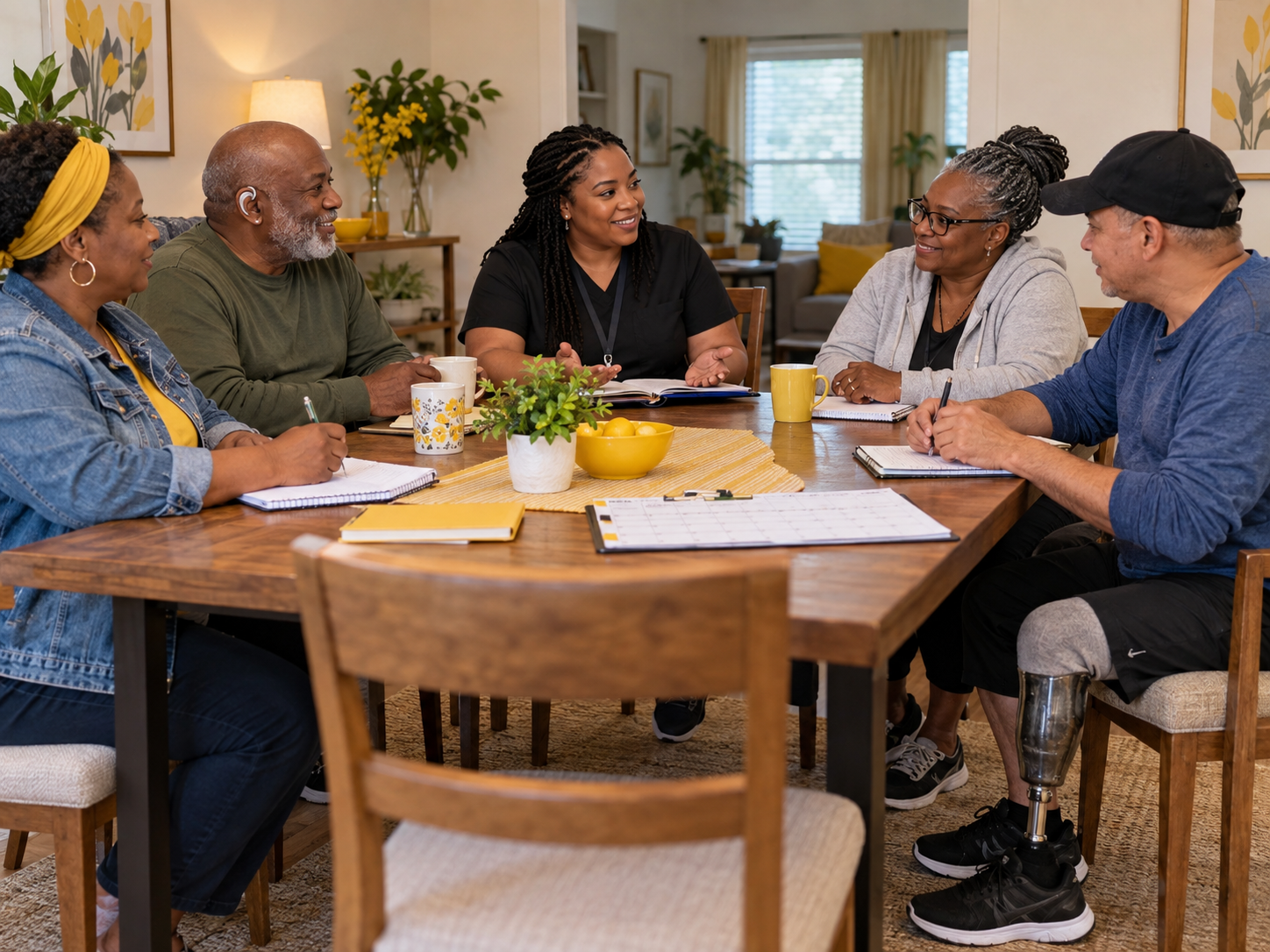
ILO’s services are more than a menu you pick from, they are a system built around figuring out, together, what actually fits for each individual’s unique needs.
-
Community Residential
Supportive, 24/7 community housing for people who need more consistent structure and supervision. -
Individualized Home Supports with Training
Hands-on skill-building in a person's own home to help them live as independently as possible.
-
24-Hour Emergency Assistance
A 24/7 phone-based safety net built to prevent a crisis, not respond to one already underway.
-
Positive Supports Services
A data-driven, team-based plan to reduce challenging behaviors and build replacement skills.
-
Crisis Stabilization
Intensive, short-term support for behaviors serious enough to threaten housing or safety.
-
Specialist Services
Short-term, expert-led support for a documented need in one specific area — like mental health, functional motor skills, social/leisure skills, or augmentative communication.
Services We Offer

Choosing the Appropriate Service.
Consider these factors to determine which service is the appropriate fit for the individual:
✓ Where does the person currently live, and can they legally receive services there?
✓ How much support do they need, and how often – occasional check-ins or someone physically present?
✓ Are behaviors putting housing, safety, or relationships at risk right now – or is this about building skills over time?
✓ How urgent is this? If they ideal service has a waitlist, we can often start elsewhere and transition later.

Referrals & Eligibility
Referrals generally come from a waiver case manager.
We’ll ask for the basics to start – name, city, and living situation – and guide you through anything else needed from there. Referrals can be submitted via the Referrals Form on our contact page.
Comparing Services
Different needs call for different levels and types of support. Use this comparison as a starting point to understand where each ILO service fits. Not sure? Reach out – we’ll help determine the appropriate path.

Community Residential
This is the best fit when:
An individual needs a staffed home environment with consistent, around-the-clock support to live safely and successfully in the community.
What it provides
24/7 residential support tailored to the individual, with an emphasis on stability, independence, personal goals, health and safety, and finding the right fit within the home.
Individualized Supports with Training
This is the best fit when:
An individual can live in their own home but needs hands-on training and support to strengthen daily living skills and increase independence.
What it provides
Goal-focused skill building in the home and community, helping individuals develop greater confidence and consistency in managing everyday life.
24-Hour Emergency Assistance
This is the best fit when:
An individual lives independently but needs access to round-the-clock assistance when an unexpected need arises.
What it provides
A 24/7 safety net for problem-solving, check-ins, and support intended to address concerns early and help prevent situations from escalating into a crisis.
Positive Supports
This is the best fit when:
An individual has ongoing behavioral or support needs that benefit from a structured, data-driven plan designed around long-term improvement.
What it provides
Assessment, strategy development, team collaboration, training, and ongoing evaluation focused on reducing challenging behaviors while building positive replacement skills and greater independence.
Crisis Stabilization
This is the best fit when:
Behavioral needs have become urgent enough to place an individual’s housing, safety, or overall stability at immediate risk.
What it provides
Intensive, short-term intervention focused on stabilizing the immediate situation, reducing risk, and establishing a path toward more sustainable ongoing support.
Specialist Services
This is the best fit when:
An individual has a specific, documented need that requires focused expertise beyond their broader support plan.
What it provides
Short-term assessment, recommendations, caregiver or team training, and follow-up from a specialist in areas such as mental health, functional motor skills, social or leisure development, or augmentative communication.
Support needs don’t always fit neatly into one category.
Some ILO services can work together.
For example, Individualized Home Supports with 24-Hour Emergency Assistance, or Community Residential with Positive Support Services. Other combinations are limited by waiver requirements, and needs may change over time.
Not sure where to start?
We’ll help you identify the appropriate service, understand current availability, and determine the next step.
FAQ
-
No. It's genuinely fine to call before anything is formal — sometimes it really does just come down to having a conversation. When you're ready, we only need three things to start: the person's name, the city they live in, and their current living situation. We'll walk you through anything else from there.
-
Often, yes. Some combinations are common — like In-Home Supports paired with 24-Hour Emergency Assistance, or Positive Support Services alongside Community Residential. A few combinations aren't allowed under waiver rules, though: someone can't be in Community Residential Services and In-Home Supports at the same time, and within Intervention Services we only provide one of the three (Positive Support, Crisis Stabilization, or Specialist) at once. We'll help you sort out what fits.
-
We'll tell you honestly if there's a wait. In the meantime, we can often start someone in a related service — and as needs change, it's common for people to move between services over time, like transitioning from Crisis Stabilization into Positive Support Services after the initial six-month period.